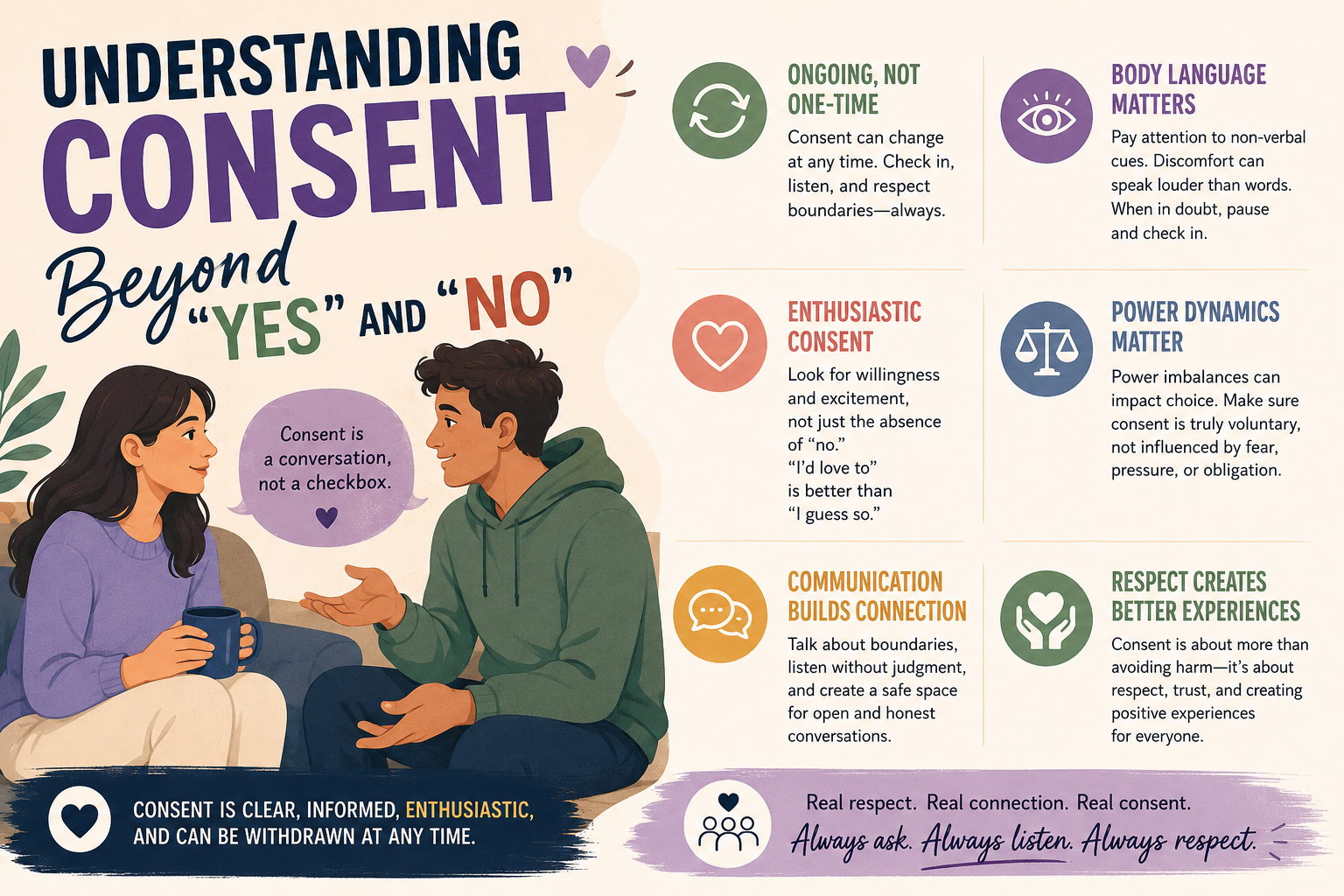
Consent is often talked about in simple terms: a person either says “yes” or they say “no.” While this is a helpful starting point, real-life interactions are often far more nuanced. Understanding consent as an ongoing conversation rather than a single moment helps create safer, healthier, and more enjoyable experiences for everyone involved.
What Does Consent Beyond Yes and No Mean?
At its core, consent is a clear, informed, and voluntary agreement between people to participate in an activity. It should be given freely, without pressure, manipulation, guilt, or fear.
However, consent is about more than hearing the word “yes.” True consent involves enthusiasm, comfort, mutual understanding, and respect for boundaries.
Why Consent Beyond Yes and No Is Ongoing
One of the most common misconceptions about consent is that once it has been given, it cannot be withdrawn. In reality, consent can change at any time.
Someone may initially feel comfortable with a situation but later decide they no longer wish to continue. That decision should always be respected without question or criticism.
Checking in with your partner throughout an experience demonstrates care, respect, and emotional awareness. Simple questions such as “Are you comfortable?” or “Do you want to keep going?” can make a significant difference.
Body Language Matters
Communication isn’t always verbal. While verbal consent is important, paying attention to non-verbal cues is equally valuable.
Signs that someone may be uncomfortable can include:
- Pulling away or creating distance
- Avoiding eye contact
- Becoming quiet or withdrawn
- Appearing tense or anxious
- Hesitating before responding
These signals don’t automatically mean consent has been withdrawn, but they are signs that a conversation may be needed. When in doubt, pause and check in.
Enthusiastic Consent
Many educators now promote the idea of enthusiastic consent. Instead of looking for the absence of a “no,” enthusiastic consent focuses on the presence of genuine willingness and excitement.
A person who feels safe, respected, and engaged is more likely to express their desires openly. This creates experiences built on mutual enjoyment rather than assumption.
The difference between “I guess so” and “I’d love to” may seem subtle, but it can completely change the quality of an interaction.
Power Dynamics and Consent
Consent can become more complex when there is a power imbalance between people. This may occur in workplaces, relationships, social groups, or situations involving significant differences in age, status, or influence.
Even when someone verbally agrees, it’s important to consider whether they genuinely feel free to make a choice. Respecting consent means being aware of these dynamics and ensuring that agreement is truly voluntary.
Communication Creates Better Experiences
Many people view conversations about boundaries as awkward or unromantic. In reality, open communication often creates stronger trust and deeper connection.
Discussing likes, dislikes, expectations, and boundaries before an encounter can reduce uncertainty and help everyone feel more comfortable.
The most confident communicators are often the people who understand that asking questions and listening carefully is a sign of respect, not insecurity.
Creating a Culture of Consent and Respect
Consent isn’t just about avoiding harm—it’s about actively creating positive experiences. When people feel heard, respected, and empowered to make choices, everyone benefits.
Whether in dating, relationships, friendships, or professional environments, understanding consent beyond “yes” and “no” encourages empathy, communication, and mutual respect.
At the end of the day, consent is not a one-time question. It’s an ongoing conversation built on trust, honesty, and the understanding that every person has the right to decide what feels right for them.
Learn more here and explore our website to learn more about the experiences we offer here