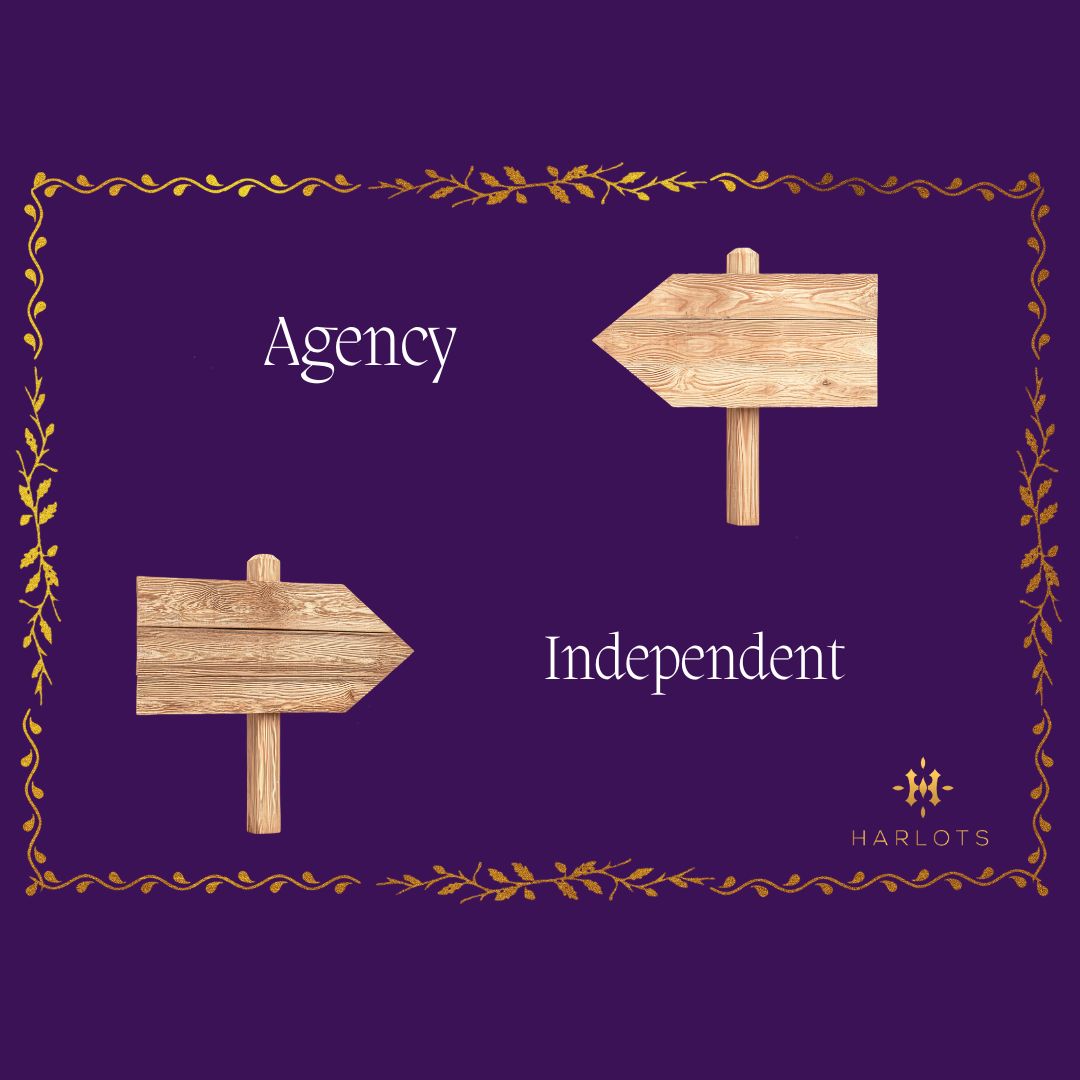
When exploring the world of professional companionship, you may come across two common terms: agency companions and independent companions. While both offer intimate, personalised experiences, the way they operate can be quite different. Understanding these differences can help clients choose the style of booking that suits them best.

What Is an Agency Companion?

An agency companion works with a professional agency that manages bookings, advertising, screening, and scheduling. The agency acts as the middle point between the client and the companion.

For clients, this often means the booking process is straightforward. You contact the agency, choose from the available companions, and the agency arranges the details for you.

Agencies typically offer several benefits:

Professional booking process – Receptionists or booking managers handle enquiries, scheduling, and questions.

Variety of companions – Agencies usually have multiple companions available, offering different looks, personalities, and experiences.

Safety and discretion – Agencies usually have processes in place to protect both companions and clients.

Reliability – If one companion becomes unavailable, the agency can often offer alternatives.

For many people, booking through an agency provides structure and peace of mind.

What Is an Independent Companion?

An independent companion works for themselves rather than through an agency. They manage every aspect of their business, including advertising, bookings, communication, and scheduling.

Because they operate independently, clients communicate directly with the companion from the beginning.

Some clients enjoy this style of booking because it can feel more personal. You are speaking directly with the person you will meet, which allows for more direct communication about preferences, expectations, and availability.

However, independent companions also manage everything themselves, which means response times, availability, and booking processes may vary depending on the individual.

Key Differences

While the experience itself may feel similar, the main difference lies in how bookings are managed.

Agency Companions

  • Bookings handled through a receptionist or agency system
  • Multiple companions available through one contact point
  • Structured scheduling and booking process
  • Independent Companions
  • Clients communicate directly with the companion
  • Each companion manages their own bookings and schedule
  • Booking processes may vary between individuals

Which Option Is Better?

There isn’t a “better” option — it simply depends on what you prefer.

Some clients enjoy the simplicity and reliability of an agency, especially if they appreciate having several companions to choose from and a professional booking system.

Others prefer the direct connection of independent companions, where they can communicate one-on-one and build a personal rapport.

At the end of the day, both agency and independent companions aim to provide memorable, enjoyable experiences. The best choice is simply the one that suits your comfort level and booking style.

If you’d like to experience it firsthand, you can check out all the amazing escorts we have available here!

We talk a lot about chemistry, about connection and about passion. But what we don’t talk about enough is what happens after. Aftercare is that quiet moment when the intensity settles, when the room feels softer. When the adrenaline fades, and you’re just two humans again.

And honestly? That part matters just as much as everything that came before it. It’s Not Just Physical Intimacy in any setting, isn’t just bodies. It’s energy,  vulnerability, and It’s trust.

When we connect with someone, even briefly, our brains light up. We get a rush of dopamine and feel the warmth of oxytocin. We might feel powerful, desired, playful, or deeply connected. And then… it ends. Sometimes that shift is smooth. Sometimes there’s a tiny emotional wobble. A quiet drop. A feeling you can’t quite name.

Aftercare helps soften that landing. It’s the difference between walking away feeling “That was hot” and walking away feeling “That was beautiful.”

Why It Changes Everything: People don’t just remember what you did. They remember how you made them feel. If someone leaves feeling rushed, dismissed, or suddenly alone, that’s what lingers. If they leave feeling warm, steady, and appreciated? That’s what stays with them.

When aftercare is done right, this is what are you communicating to the other person? 

“You mattered.”

“That moment mattered.”

“You’re not just a body walking out the door.”

And that hits differently. It’s about Emotional Safety. Real confidence isn’t just about creating intensity; it’s about holding space after it. When someone has opened up, let their guard down, or shared something intimate, even for a short time, there’s vulnerability there. Whether anyone admits it or not.

Aftercare honours that vulnerability instead of pretending it didn’t exist. It makes the experience feel whole. It Goes Both Ways. This isn’t just about one person looking after the other. Aftercare can be mutual. Sometimes the person who seemed “in control” needs grounding, too. Sometimes, both people just need a breath, a reset, a human moment before stepping back into the outside world. That shared pause can be surprisingly powerful.

The Part no one sees, but everyone feels. The best experiences aren’t just intense. They’re complete. They start with anticipation, then they build with connection, and finally they close with care. Aftercare is the final chapter, the soft exhale at the end of the story. And more often than not, it’s the part people remember most.

I hope this helps you understand why aftercare is such an important part of any intimate experience and gives you ideas for creating a safe, connected, and enjoyable space for yourself and your partner. For more tips on emotional intimacy and connection, you can read more here. Or, if you’d like to experience it firsthand, you can check out all the amazing escorts we have available here!

What Is Erectile Dysfunction?

Erectile Dysfunction, aka ED or impotence, is the inability to get or keep an erection. It can affect up to 50% of men aged 40 to 70. Now the occasional failure to get an erection is normal and often related to alcohol, anxiety, tiredness or a combination of all three. However, if you are having ongoing issues, then that’s not normal, and you need to have a chat with your doctor. 

Causes Of Erectile Dysfunction

There are lots of different factors that can cause ED. Anxiety or depression used to be considered the main cause, but is in fact only the main cause in 1 of 10 cases. Most cases of ED are physical or anatomical, with ED being a symptom of another problem. Some examples of main causes are illnesses such as diabetes, MS, or high blood pressure. It can also be a side effect of surgery, like a radiation treatment or a prostatectomy, or a side effect of medications. Another leading cause is your lifestyle, like smoking, alcohol and obesity. So what are some treatments for ED?

Counselling & Therapy

While only the main cause in 1 of 10 cases, anxiety, depression and stress can seriously impact your ability to maintain an erection. Counselling and therapy can be a great way to combat these issues and may also help with your Erectile Dysfunction. 

Vacuum Erection Devices

Vacuum erection devices or penis pumps are a drug-free way of treating ED. They help by increasing the blood flow to the penis and can help create an erection that works well enough for penetration. However, they tend not to be as effective as medications.

Medications

While medications can be the cause of Erectile Dysfunction, some medications can also be the treatment. If medication is the cause, you can discuss changing your prescription with your doctor. However, there are a few prescription medications that can help improve the blood flow to the penis, famously the little blue pill. These medications won’t cause erections, but will help boost any erections you get. However, these medications can have their own side effects like facial flushing, headaches and sometimes muscle pain and reflux. There are also new versions of this medication that can be compounded into lozenges, which tend to be more effective. As always with medications, have a discussion with your doctor about what’s right for you.

Injections

For those men who can’t take oral medications, there are injections available. They can be a bit daunting as you inject them straight into the penis, but the needle is very small, and most users find it surprisingly painless, a 1.1/10 on the pain scale. This injection takes about 5 minutes to kick in, forces an erection even if you aren’t aroused, and you’ll be hard for about 45 minutes. This medication is serious stuff, so you definitely need medical guidance before use.

I hope this helps you tackle Erectile Dysfunction and have those tough conversations with your doctor. For more information on erectile dysfunction, you can read more here. Or if you’d like to try out some of these techniques, you can see all the gorgeous escorts we have available here